The Who Method: A Data-Driven System for Hiring Leaders Who Deliver
Strategy matters. So do products and processes. But organizations ultimately depend on the people responsible for delivering results. Yet most organizations get their most consequential people decisions wrong roughly half the time. Research conducted by ghSMART across thousands of hiring outcomes shows that the typical manager’s hiring success rate hovers around 50 percent – no better than a coin flip. When those decisions involve C-suite and senior leadership roles, the financial consequences are severe: a single mis-hire costs an estimated 15 times the executive’s base salary in hard costs, lost productivity, and organizational disruption.
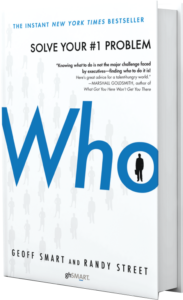 The Who Method, developed by ghSMART, was created to solve this problem. Published as Who: The A Method for Hiring – a New York Times, Wall Street Journal, and USA Today bestseller by Chairman and Founder Dr. Geoff Smart and Senior Advisor Randy Street – the methodology provides a repeatable, evidence-based system for defining what success looks like in a role, evaluating candidates against that definition, and making leadership decisions with confidence. Over 30-plus years of advisory work and more than 30,000 C-suite assessments, ghSMART has helped boards, CEOs, and investors raise their hiring success rate from approximately 50 percent to 90 percent or higher.
Two elements are central to the Who Method: the Scorecard, which defines success before the search begins, and the SmartAssessment®, ghSMART’s proprietary structured chronological interview methodology (detailed in Who as the Who Interview) that generates the data needed to evaluate candidates against the Scorecard with objectivity and accuracy. Together, they replace intuition-led hiring with a more disciplined, evidence-based decision process.
The Scorecard: Defining Success Before the Search Begins
Most organizations begin a leadership search with a job description – a list of activities, qualifications, and responsibilities that tells candidates what they will do but fails to specify what they must achieve. The Scorecard replaces the traditional job description with a concise, measurable definition of success. It answers three fundamental questions: Why does this role exist? What must the person accomplish? And how must they operate to fit the organization’s culture and deliver results?
ghSMART’s Scorecard methodology has been refined across thousands of engagements with Fortune 500 companies, private equity portfolio companies, and public-sector organizations. Each Scorecard is custom-built through a process that begins with understanding the organization’s strategic context, stakeholder expectations, and the specific challenges a new leader will face. The result is a document that aligns every decision-maker on what “great” looks like before a single candidate is considered.
The Scorecard has three components: Mission, Outcomes, and Competencies.
Mission: The Core Purpose of the Role
The Mission is an executive summary of why the role exists – stated in plain, specific language that any stakeholder can understand without clarification. A well-crafted Mission eliminates the ambiguity that causes hiring committees to evaluate candidates against different, often conflicting, mental models of what the job requires.
Effective Missions are concise yet precise. Rather than generic language about “maximizing shareholder value” or “driving growth,” a strong Mission describes the specific strategic challenge the role was created to address. For example, a Mission for a Chief Financial Officer at a pre-IPO technology company might read: “Lead the finance organization through IPO readiness, establish public-company reporting infrastructure, and serve as the primary financial voice with investors and the board.” That clarity gives everyone involved in sourcing, interviewing, and evaluation the same definition of success.
In practice, ghSMART’s Scorecard creation process involves structured conversations with the hiring executive, board members, and key stakeholders to surface the two or three priorities that will define success in the first 12 to 24 months. The Mission that emerges becomes the organizing principle for every subsequent step in the process.
Outcomes: Measurable Results That Define A-Player Performance
Outcomes are the specific, measurable results a leader must deliver to be considered successful. They are the core differentiator between a Scorecard and a traditional job description. Where job descriptions list activities (“manage the sales team,” “oversee marketing operations”), Outcomes define results (“Grow revenue from $200 million to $400 million over five years at 15 percent annual growth,” “Build a leadership team composed of 90 percent or more A Players within three years”).
This distinction matters because it shifts evaluation from subjective impressions to objective evidence. During the SmartAssessment® interview process, ghSMART consultants can assess whether a candidate’s track record demonstrates the ability to achieve each specific Outcome—not simply whether the candidate has held a similar title or worked in the same industry.
ghSMART typically recommends three to five Outcomes per Scorecard, set at a level high enough to differentiate true A Players from adequate performers. The standard is demanding by design: an A Player is defined as a candidate who has at least a 90 percent chance of achieving a set of outcomes that only the top 10 percent of possible candidates could achieve. Setting Outcomes at this level naturally attracts top performers who thrive on meaningful challenges while discouraging candidates who lack the track record to compete.
Competencies: The Behaviors and Attributes That Drive Results
Competencies describe how a leader must operate to achieve the Outcomes and fit the organization’s culture. They encompass the behavioral traits, leadership capabilities, and values that distinguish candidates who will thrive from those who may deliver short-term results but create long-term organizational damage.
Cultural competencies are particularly important and often overlooked. ghSMART’s process includes a deliberate evaluation of the hiring organization’s culture – typically by asking the leadership team to describe the adjectives that define how the organization operates, what behaviors are rewarded, and what behaviors lead to failure. This analysis produces a set of cultural competencies that ensure the new leader can operate effectively within the existing environment while also challenging the organization where change is needed.
The interplay between Outcomes and Competencies creates what ghSMART calls the “skill-will bull’s-eye.” Skill refers to whether a candidate can achieve the Outcomes based on their track record. Will refers to whether their motivations, behaviors, and values align with the Mission and Competencies. An A Player for the role is a candidate who demonstrates both: high confidence in their ability to deliver results and strong alignment with how the organization needs them to operate.
The SmartAssessment: A Structured, Chronological Interview That Predicts Performance
Traditional interviews often provide too little evidence to predict executive performance reliably. Meta-analyses of over 4,000 studies confirm that conventional interview formats – unstructured conversations, trick questions, hypothetical scenarios, and personality assessments – fail to generate the data needed to make reliable hiring decisions. ghSMART refers to these approaches collectively as “hocus pocus hiring” or “hiring malpractice” and they are the primary reason that the typical manager’s hiring success rate remains at roughly 50 percent.
The SmartAssessment is ghSMART’s proprietary structured, chronological interview methodology (detailed in Who: The A Method for Hiring as the foundational interview process) designed to uncover the patterns of behavior, results, and motivations across a candidate’s full career history that predict future performance. The underlying principle is that past behavior is the best predictor of future behavior – a premise supported by decades of industrial-organizational psychology research and validated by ghSMART’s own data across 30,000-plus leadership assessments.
The Five-Question Framework
For each role in the candidate’s career history, the SmartAssessment uses five core questions that are deceptively simple but extraordinarily effective at generating predictive data:
For each role in the candidate’s career history, the SmartAssessment uses five core questions that are simple, consistent questions designed to generate comparable evidence:
-
- What were you hired to do? This question establishes the context and expectations of each role. In effect, it asks the candidate to reconstruct what their Scorecard would have been – what the organization needed them to accomplish when they took the job. The answer reveals whether the candidate thinks in terms of outcomes and priorities, or whether they default to describing activities and responsibilities.
- What accomplishments are you most proud of? A Players tend to describe specific, measurable outcomes linked to the expectations established in the first question. They speak in concrete terms about results they drove. B and C Players, by contrast, tend to speak more generally about events, relationships, or aspects of the role they enjoyed without anchoring their answers in measurable impact.
- What were some low points during that job? This question is critical and must be pressed. Every role involves challenges, setbacks, and failures, and the way a candidate discusses them reveals their self-awareness, resilience, and capacity for growth. Interviewers are trained to push past surface-level answers until the candidate shares substantive low points that provide genuine insight.
- Who were the people you worked with, and what would they say about you? This question probes the candidate’s relationships with bosses, peers, and direct reports. Candidates are asked for their supervisor’s name, what the working relationship was like, and – critically – what that supervisor will say about their strengths and areas for improvement when contacted for a reference. The deliberate use of “will” rather than “would” signals that references will be checked, which encourages candor. Who details this as Threat of Reference Check, or TORC, and it is a mechanism designed to encourage candor.
- Why did you leave that job? This final question reveals one of the most important patterns in a candidate’s career: whether they were “pulled” toward greater opportunities by people who valued their work, or “pushed” out of roles due to underperformance, conflict, or organizational downsizing. The pull-versus-push pattern is a strong indicator of A-Player status. Candidates who were consistently recruited away by former clients, bosses, or colleagues demonstrate a track record of being valued by the market. The methodology flags candidates who were pushed out of more than 20 percent of their roles as a significant risk factor.
From Data to Decision: How the SmartAssessment Connects to the Scorecard
The SmartAssessment is designed to be evaluated directly against the Scorecard.
This evidence-based evaluation replaces the subjective “gut feel” that dominates most executive hiring decisions. Rather than asking whether the candidate “seems like a good fit,” the process asks whether the data supports a 90-percent-or-greater confidence level that the candidate can achieve each Outcome and operate in alignment with each Competency. The result is an evidence-based assessment that can be compared consistently across candidates and explained clearly to decision-makers.
The SmartAssessment is often complemented by structured reference interviews with six to eight former bosses, peers, and direct reports. This triangulation of self-reported data, chronological career evidence, and third-party validation produces what ghSMART describes as a high-accuracy, high-reliability assessment. Client surveys consistently report hiring success rates above 90 percent when the full methodology is applied, with some client organizations tracking accuracy rates exceeding 95 percent across hundreds of assessments.
Board and Investor Applications: How Scorecards and SmartAssessments Drive Leadership Decisions at the Highest Levels
While the Who Method was originally developed to improve hiring outcomes at every organizational level, some of its highest-impact applications are in the boardroom and the investment committee. CEOs, boards of directors, and private equity investors face leadership decisions where leadership mistakes can carry significant strategic and financial consequences. The Scorecard and SmartAssessment provide the structured, data-driven framework these decision-makers need.
CEO succession is widely recognized as the board’s most important responsibility, yet many boards approach it without a rigorous methodology. ghSMART’s approach begins with creating a Scorecard for the next CEO that reflects the company’s strategic inflection point: Where is the business going over the next three to five years, and what kind of leader does it need to get there? The Scorecard is developed through structured interviews with board members, the incumbent CEO, and key stakeholders to ensure alignment on the Mission, Outcomes, and Competencies required.
Internal succession candidates and external prospects are then evaluated through the SmartAssessment, producing a calibrated, apples-to-apples comparison across the candidate pool. The assessment data is further enriched by benchmarking against ghSMART’s CEO Genome® research, which has identified the four behaviors that most strongly differentiate high-performing CEOs: decisiveness, the ability to adapt proactively, reliable delivery of results, and the capacity to engage stakeholders without sacrificing authenticity. Boards receive a comprehensive written report and verbal debrief that translates assessment data into actionable insights for the succession decision.
Private Equity Portfolio Company Leadership Evaluation
Private equity investors face a unique challenge: they must evaluate the leadership capacity of executives who will be responsible for executing ambitious value-creation plans, often within compressed investment horizons of three to five years. A management team that is misaligned with the value-creation thesis can erode returns before the portfolio company ever reaches its potential.
ghSMART partners with private equity firms at multiple stages of the investment lifecycle. During pre-acquisition due diligence, SmartAssessments of the incumbent management team help investors determine whether the current leaders can execute the post-close plan or whether changes are needed. Post-close, Scorecards for each critical role are aligned to the 100-day plan and longer-term value-creation objectives, creating clear accountability for the leadership team. When leadership gaps are identified, the SmartAssessment process is used to evaluate and select replacement candidates using the same structured evaluation process.
Private equity firms use this approach when leadership decisions are closely tied to the investment thesis and value-creation plan. In these settings, a Scorecard-driven process creates a clearer link between the leadership decision and the results the investment depends on.
Executive Selection for Critical Roles
Beyond CEO succession and private equity applications, the Who Method is used by organizations to fill any role where a hiring mistake would create significant strategic or financial risk. Chief Financial Officers, Chief Operating Officers, heads of business units, and other senior leaders are routinely evaluated through the SmartAssessment process.
The methodology is also applied in lateral contexts: organizations use SmartAssessments to evaluate existing leaders who are being considered for expanded responsibilities, new assignments, or inclusion in high-potential development programs. In these cases, the Scorecard for the target role is developed first, and the assessment is conducted to determine the leader’s fit and identify any opportunities for growth that could be addressed through coaching or stretch roles.
ghSMART can provide developmental feedback to leaders who go through the process, whether or not they are selected for the role.
Beyond Hiring: A Powerful Tool for Leadership Development
While the Who Method is best known for helping organizations make high-stakes hiring decisions, the same SmartAssessment methodology is equally valuable for developing existing leaders. Through a structured, data-driven evaluation anchored to a leader’s Scorecard, the assessment provides deep insight into strengths, opportunities for growth, motivations, and potential. The assessment generates actionable coaching and development recommendations, helping leaders build the capabilities that matter most for success in their roles. The result is a practical roadmap for accelerating development, expanding leadership capacity, and preparing executives for broader responsibilities. Learn more in our article
Scorecards: They’re Not Just for Hiring Anymore.
